
Impact Investing
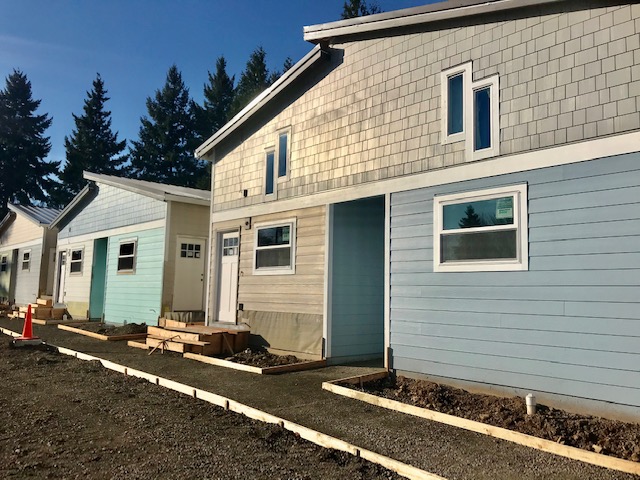

Investing in Stronger, More Resilient Communities
We believe philanthropy can do more than provide grants. Through impact investing, we put capital to work in ways that advance our mission while helping build stronger, more resilient communities throughout Washington and Oregon.
Program Related Investments
Kuni Foundation supports nonprofits focused on advancing housing for people with IDD through low- to no-interest loans that provide access to affordable capital. These investments offer nonprofits greater financial flexibility and the opportunity to attract additional capital while allowing the Foundation to extend the reach of its philanthropic resources.
Place-Based Investing Through Community Development Financial Institutions
Foundations and philanthropic organizations play a vital role in supporting Community Development Financial Institutions (CDFIs) by providing flexible, high-risk, and patient capital that traditional banks and federal programs cannot or will not supply. Kuni Foundation supports these vital efforts through a $1 million investment in Craft3’s Community Impact Investment Notes.
Organizations like Craft3—the largest certified CDFI loan fund in the region—focus explicitly on building economic, ecological and family resilience across Oregon and Washington. Craft3 is a critical financial bridge in the Pacific Northwest, providing responsible capital and technical assistance to individuals, small businesses, and communities. By managing risk differently, CDFIs turn systemic gaps into economic opportunities through several distinct regional roles:

1. Expanding Capital for Underserved Entrepreneurs
Traditional banks often decline loans due to strict collateral requirements, limited credit history, or volatile revenues. Regional CDFIs fill this void by deploying flexible business and micro-loans.
Focus on Equity: CDFIs prioritize funding for historically excluded groups, including Black, Indigenous, people of color (BIPOC), women, veterans, and immigrant-owned businesses. For example, Craft3 has historically injected hundreds of millions of dollars into the Pacific Northwest, supporting thousands of commercial loans to diverse or marginalized business owners.
2. Strengthening Rural and Tribal Economies
Mainstream financial institutions often consolidate their footprints into urban centers, leaving rural areas and tribal communities under-resourced.
- Localized Infrastructure: CDFIs finance core community priorities like healthcare centers, early childhood education facilities, and small businesses in rural and tribal locations.
- Tailored Partnerships: In Washington, Craft3 partners with entities like the Affiliated Tribes of Northwest Indians Economic Development Corporation to fund essential infrastructure and local operational needs for tribal community businesses.
3. Executing Ecological & Climate Solutions
Reflecting the Pacific Northwest’s unique regional focus on environmental sustainability, Pacific Northwest CDFIs intentionally tie financial capital to ecological health.
- Clean Water Loans: A major initiative includes providing localized, public-private consumer lending programs to help homeowners finance emergency repairs or replacements for failing septic systems, protecting regional water systems.
- Climate Adaptation: Craft3 actively funds clean technology projects, habitat conservation initiatives, and energy efficiency upgrades for residential properties and local small businesses.
4. Serving as Ecosystem ‘Graduation’ and Advocacy Engines
CDFIs do not aim to replace mainstream banks; instead, they operate symbiotically within the financial ecosystem.
- Bank-to-CDFI Pipeline: Regulated banks invest senior debt into CDFIs to meet Community Reinvestment Act (CRA) goals. The CDFIs take on the high-touch, localized lending, providing the wrapper of business coaching and financial modeling to help businesses stabilize. Once the business established a strong track record, they “graduate” back to conventional bank financing.
- Collective Policy Voice: Regional CDFIs organize coalitions—such as the Washington Community Investment Coalition—to advocate for dedicated state and federal funding (like New Markets Tax Credits) to ensure systemic public capital is channeled into low-income communities.

By partnering with a mission-driven community lender, we help expand access to financing that can fuel economic opportunity, sustain essential services, and strengthen the organizations and enterprises that communities depend on.
For the Kuni Foundation, impact investing is an extension of our commitment to lasting, meaningful change. By combining the power of philanthropy with the potential of impact investing, we can help organizations build capacity, create opportunity, and contribute to thriving communities across our region.